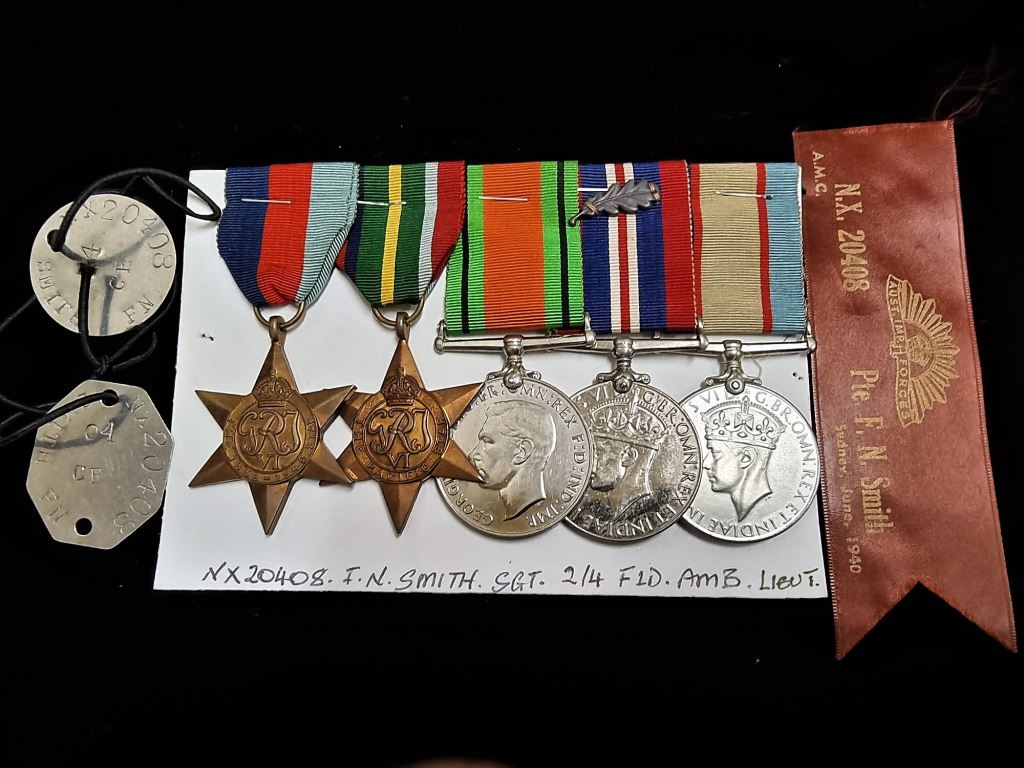

GH14: Five: 1939-45 & Pacific Stars (unnamed), Defense Medal, War Medal with MID & Australian Service medals (all 3 impressed). NX20408 F. N. Smith. Lieutenant 2/4 Field Ambulance.
Comes with a printed souvenir ribbon with his name dated 1940, dog tags. and original slip for his ASM.
Mentioned in book Island Campaigns at Myola.
MID: London Gazette 23.12.43. Gallant & distinguished services in SWP area.
VF $1950
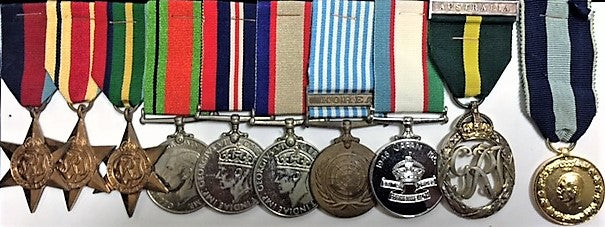

GH16: Nine: 1939-45 Star; Africa Star; Pacific Star (all small impressed) Defence Medal; British War Medal 1939-45; Australia Service Medal; United Nations Korea (all four impressed) Efficiency Decoration (GRI); Greek War Medal 1940-41; VX160 G.F. Sell. ED engraved; last medal unnamed. Lt. Col. 2/5th BN AIF.
Together with: BCOF Medal named impressed to G.E. Sell. And with extensive research and official histories extracts relating to Colonel G.E. Sell's service in 2/5 Bn. and BCOF. Regimental number on WW2 VX160 Korea SX 700037 & VX160 on Decoration. Comes with research showing numerous photos and entries in Official History “To Benghazi” plus 2/5th History.
Served Palestine, Egypt, Libya, Greece & Syria (NOTED AS A CASUALTY). Went on to serve in BECOF. A very easily researchable group.
VF $2450


GH17: Pair: British Korea with MID (impressed) & UN Korea (engraved) A22325 B. F. White Leading Aircraftsman RAAF 77Sqn.
MID London Gazette 19. 01.54, Australian Gazette 21.01.54 “Personal example and devotion to duty”,
Comes with 50-year commemoration & S Korea medals (both engraved) & Korean citation.
George tended to engrave unnamed medals such as UN Korea. It is believed a number of the UN medals were originally issued unnamed. With Defence letter confirming awards.
VF On Hold
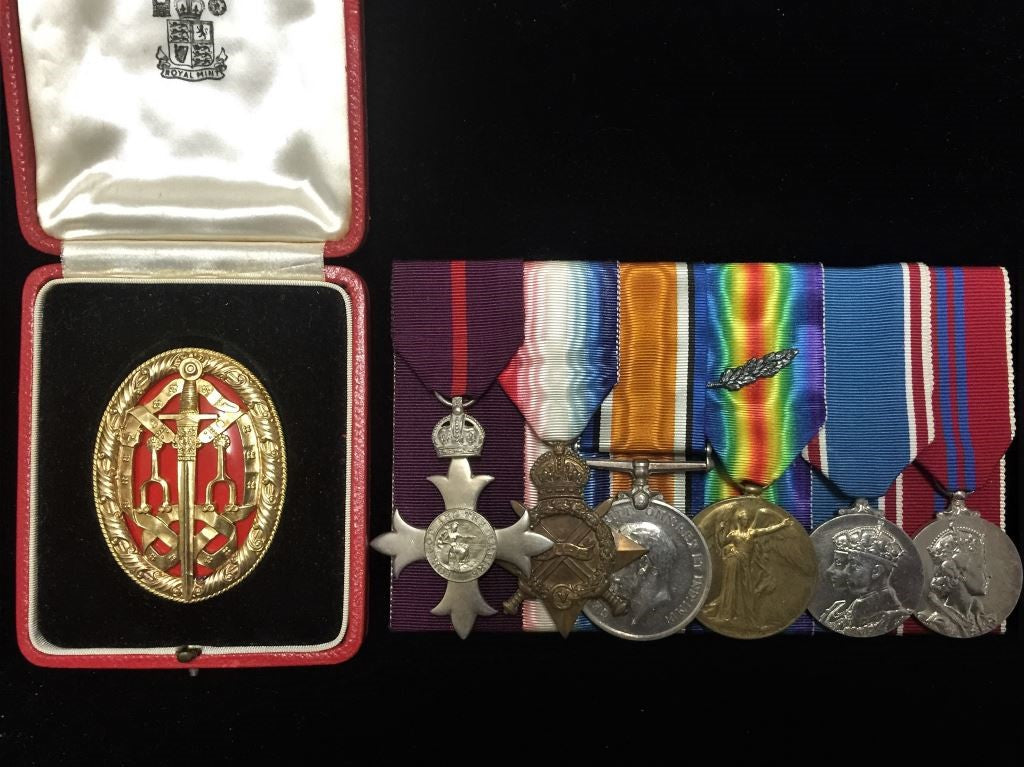

GH18: Seven: Knight Bachelor's Badge: Order of the British Empire - first type military member's breast badge; 1914-15 Star; British War Medal 1914-18; Victory Medal with M.I.D.; Coronation Medal 1937; Coronation Medal 1953. CAPT W.J. Cooper A.I.F. WWI trio impressed, others unnamed.
Senator the Hon.Sir Walter Jackson Cooper Kt MBE Federal Minister for Repatriation 1949-60. Former Senate Opposition Leader, Senator for Queensland 1928-32 and 1934.
Born 23rd April 1891 Lancs. U.K. arrive in Australia 1910. Took up pastoral property in Winton Qld 1914. Served in 15 Bn A.I.F. at Gallipoli, Egypt, and France. Lost right leg at Pozieres 1916. Transferred to No.4 Sqdn A.F.C. (MBE) honoured by Royal Humane Society for saving life at Southport Qld 1913.
Kt.1959. M.I.D. MO/331 1919. MBE C.G. 6Oct1919.'This Officer has throughout the final stages of the war, performed his duties as Recording Officer in a splendidly official manner, he worked under great stress and difficulty during the final advance. His earnest and wholehearted attention to duty has been a fine example to all and has greatly helped the work of the Squadron'.
Died at Manly Qld on 22Jul1973.
Coronation medals confirmed.
Knight Bachelor's badge in case of issue.
Comes with 9ct gold RSL Life Member's badge named on reverse and dated 21Feb1961.
Ex Noble Sale Lot 2067 Sale 67 2001
VF $7000
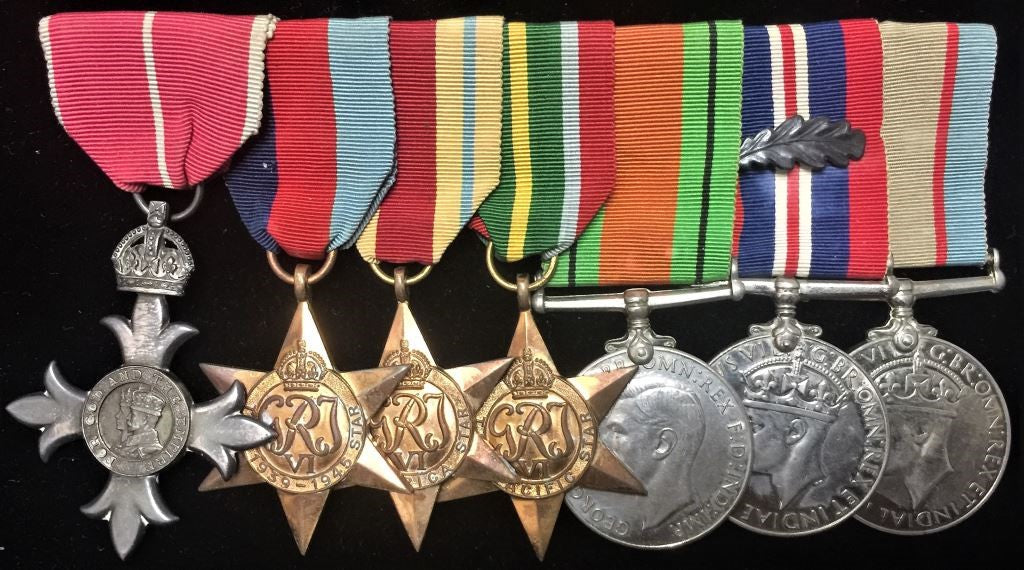

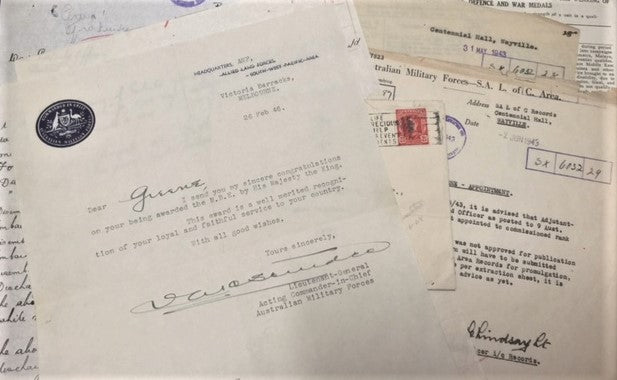

GH19: Seven: MBE Military, 1939-45 Star, Africa Star and Pacific Stars (all small letter impressed) Defence medal, War medal MID and ASM (all impressed) SX 6032 Captain J. S. Greene AASC.
MID London Gazette 23,12.1943 Australian Gazette same date 23.12.1943
MBE London Gazette 14.2.46 Australian Gazette 21.2.46
Comes with RAS badge and original documents (5) referring to his MBE and Service.
A scarce double award group.
Gd VF $2500


GH1: Five: 39-45 & Africa Stars, Defense, War & Australian Service Medals (all 5 impressed). SX2987 Pte C. H. Scott HQ ME AIF.
Enlisted May 1940 discharged October 1943. Comes with a pair of original fiber dog tags.
VF $475

GH20: An extremely rare group of eight comprising: 1939-45 Star and Pacific Star with BURMA CLASP (small, impressed naming) Defence Medal, War Medal and ASM (impressed), British Korea and UN Korea (both impressed) Efficiency Medal G.VI.R (engraved SGT AIF). VX 53290 & 3/3518 D L Rankin
Douglas Lloyd Rankin served Suez with the 2/7 Battalion (so no Africa star), from 13 October 1942 transferring to the 25th Australian War Graves Unit 29th June 1945 to Rangoon and the Pacific region 1 September 1945 which qualified him for the BURMA CLASP an extremely rare award to the Australian Army (the only example I have seen).
Service in Korea commenced on the 9th March 1953 with HQ British Commonwealth Force Korea.
All medals confirmed by Neil Smith.
VF $3500


GH21: Pair: Queens South Africa 1899 four clasps “CC, Rhodesia, OFS, T” 1258 Tpr. A. Cain NSW BUSHMEN KSA two clasps 345 Serjt. A. Cain BECH’LD RIF.
Note: Alexander Cain was born in Geelong, Victoria.
ex Bill Woolmore collection
Gd VF SOLD


GH22: Pair: British war medal and Victory medal impressed to 4191 PTE A SMITH 23 BN AIF
4191 Pte Alfred Smith embarked on the 7th March 1916 from Melbourne with the 23rd Battalion AIF.
WIA: 4th October 1917 “Gunshot wounds left leg and right foot” CCS 10 France
Alfred succumbed to his wounds on the 6th October 1917 France with the 23rd Battalion at the age of 19
Grave reference; Lijssenthoek Military Cemetery XX - G - 13A
Place of association: Ballarat, Victoria.
Note: comes with replica miniature death plaque.
VF $525
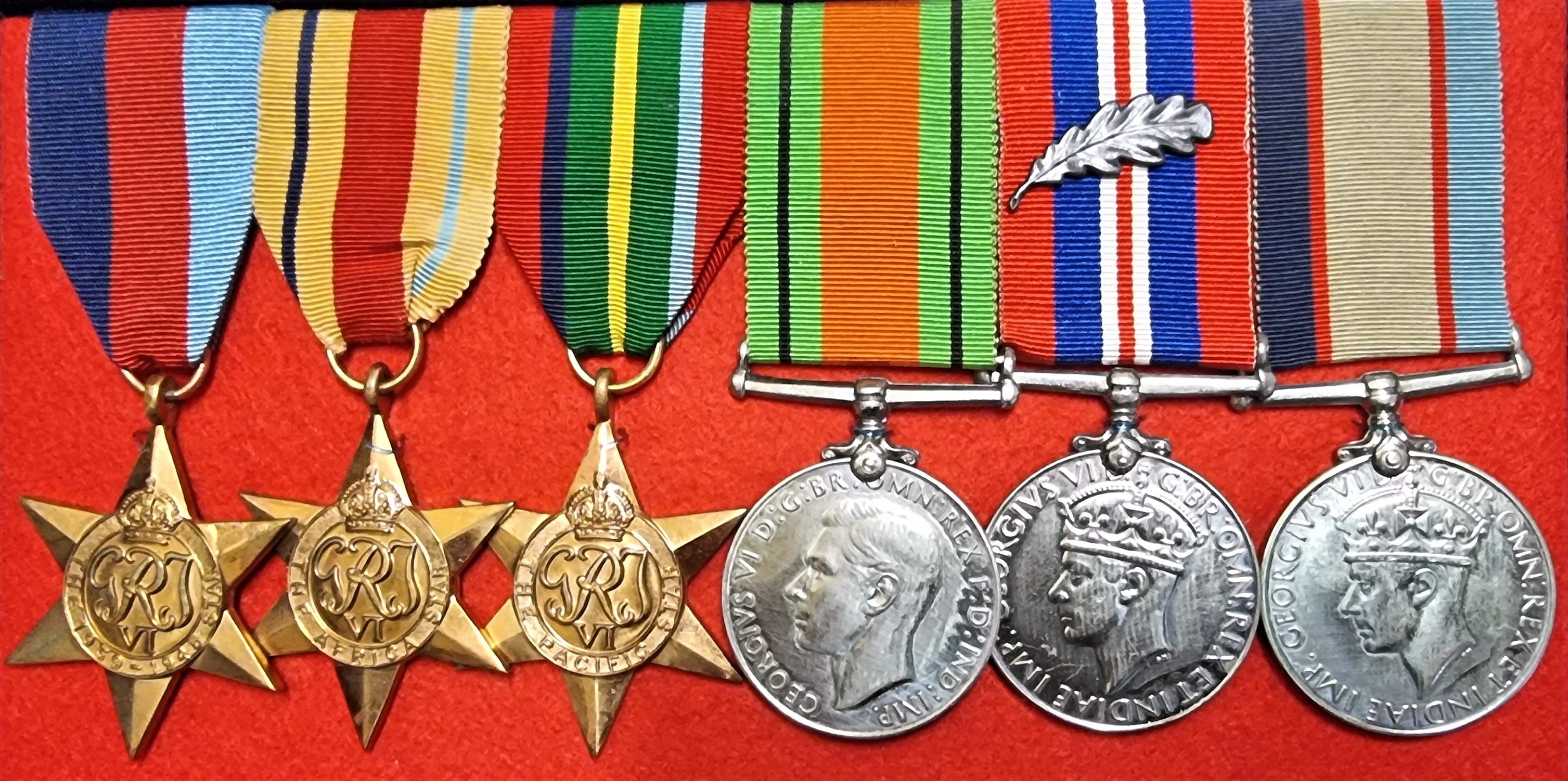

GH3: Six: 1939-45, Africa & Pacific Stars Defence, War MID & Australian Service Medals ALL correctly impressed. VX1546 H. G. Lane SGT. 2/32 Bn.
MID: London Gazette 6 March 1947
Embarked for Middle East 3 Jan. 1941. From 25 May 1941 operations in North Africa including Syria. Embarked Suez 8 Feb. 1942. To New Guinea 9 Sept. 1942 Back to Brisbane with Malaria 30 Dec. 1942 then back to NG July 1943. To Morotai for operations Balikpapan 22 June 1945.
Comes with three letters from mates that served with him. He died in 1983. He is identified in a group photo in the AWM Neg. number 068561 Queensland Strathpine 2/31 Battalion.
Near EF $2250
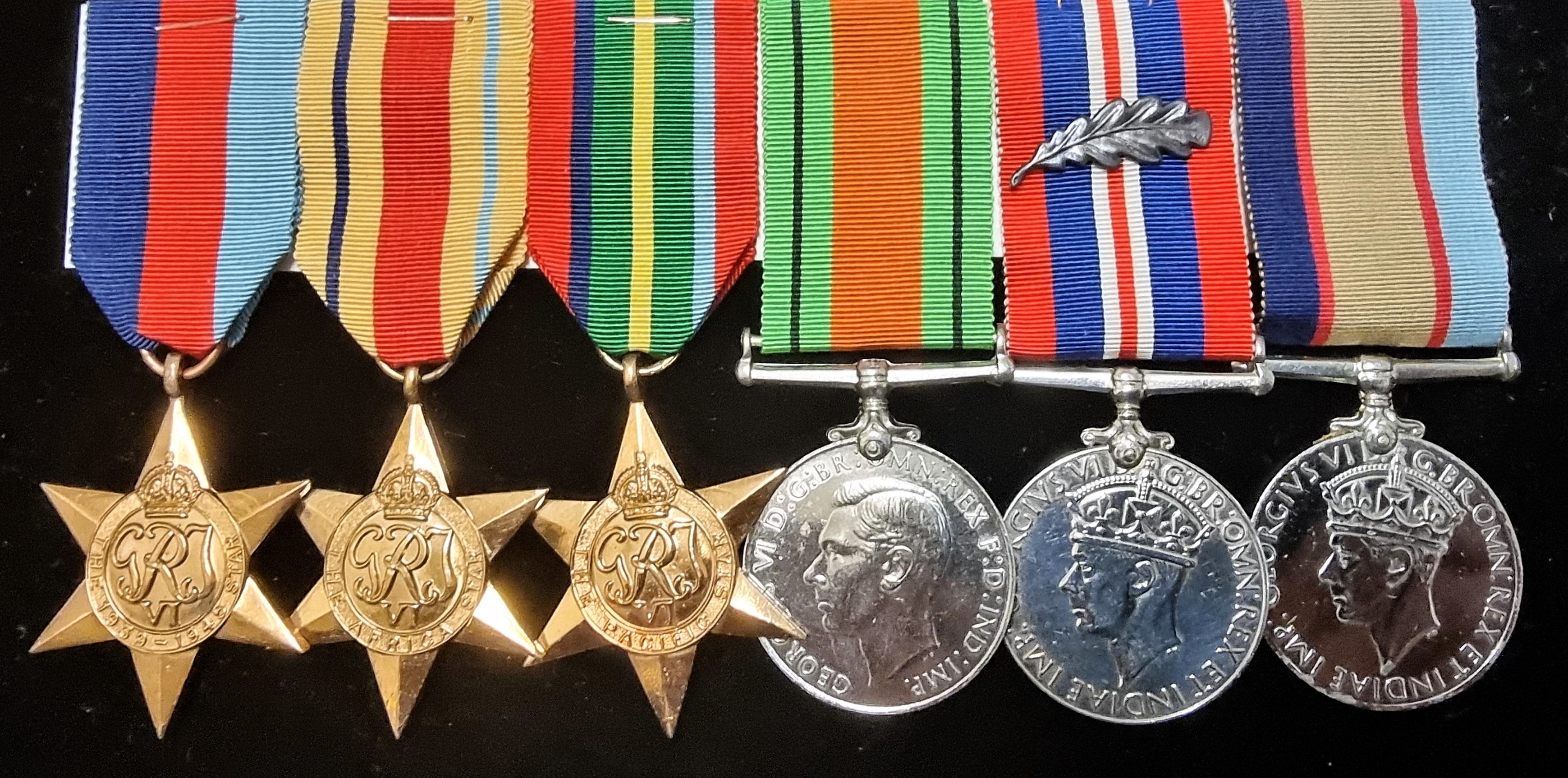

GH4: Six: 1939-45, Africa & Pacific Stars Defence, War MID & Australian Service Medals ALL correctly impressed. VX5248 R. L. Jenkins WO2 2/5th Bn.
MID: London Gazette 23.6.42 Awarded MID 19th July 1941 for service in North Africa.
Operations in North Africa from January 1941 including Bardia. To Greece 9th April 1941, withdrawn under fire May 1941 then operations against the Vichy French from May to July. RTA 1942 then to New Guinea 17th November 1942. Medically downgraded June 1944 to Water transport in QLD.
With original HQ records letter confirming all awards.
Near EF $2250
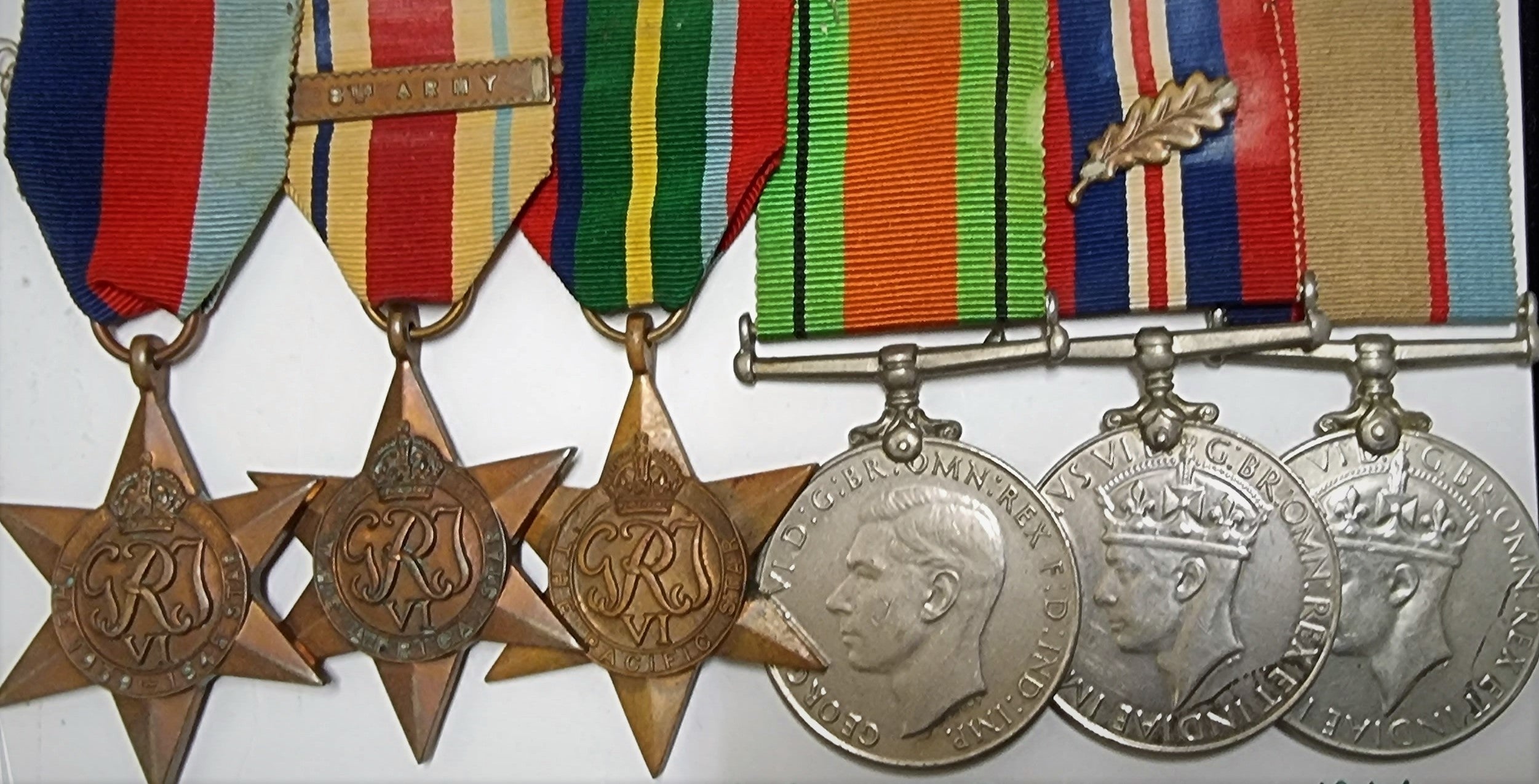

GH6: Six: 1939-45, Africa clasp 8th Army & Pacific stars (unnamed), Defence medal, War medal with MID & Australian Service Medal, last 3 are impressed. NX17879 SGT A.J. Quick 2/17th Bn. AIF.
MID: Awarded for Service in the Middle East vide Commonwealth Gazette Number 53 of 16th March 1944 and General Orders of the 31st of August 1943.
MID confirmed plus photocopy of NCO’s (in which he is identified) on page 89 of unit History “What we have we Hold”.
A nice Battalion group to a Tobruk Veteran.
VF $2200
GHOSTS IN KHAKI - History of the 2/4th machine Gun Battalion, 8 Div A.I.F. by Les Cody, 374 pages, Nominal Roll with full details and many photos. New Release .
SOLD



$20


$20
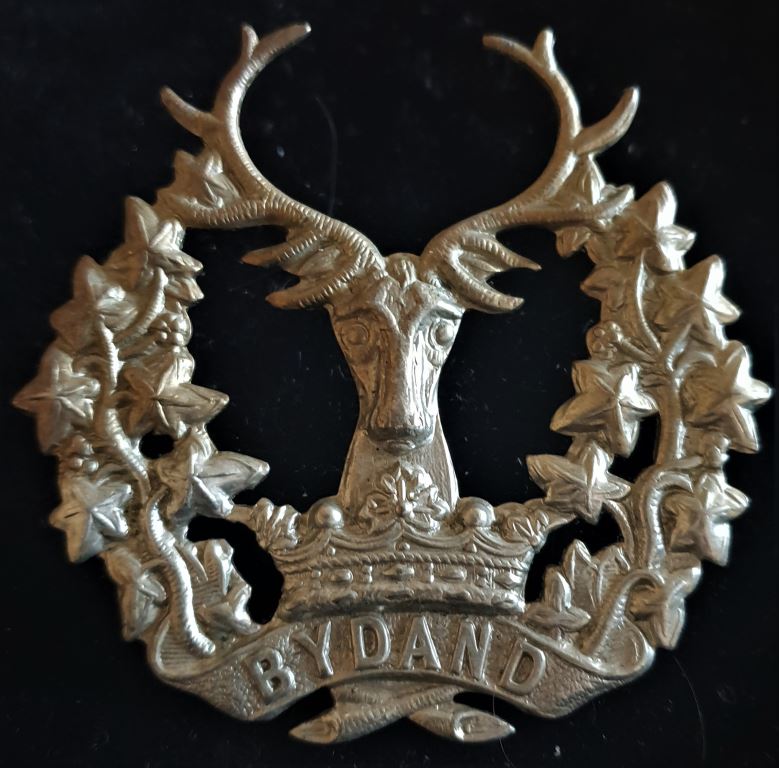

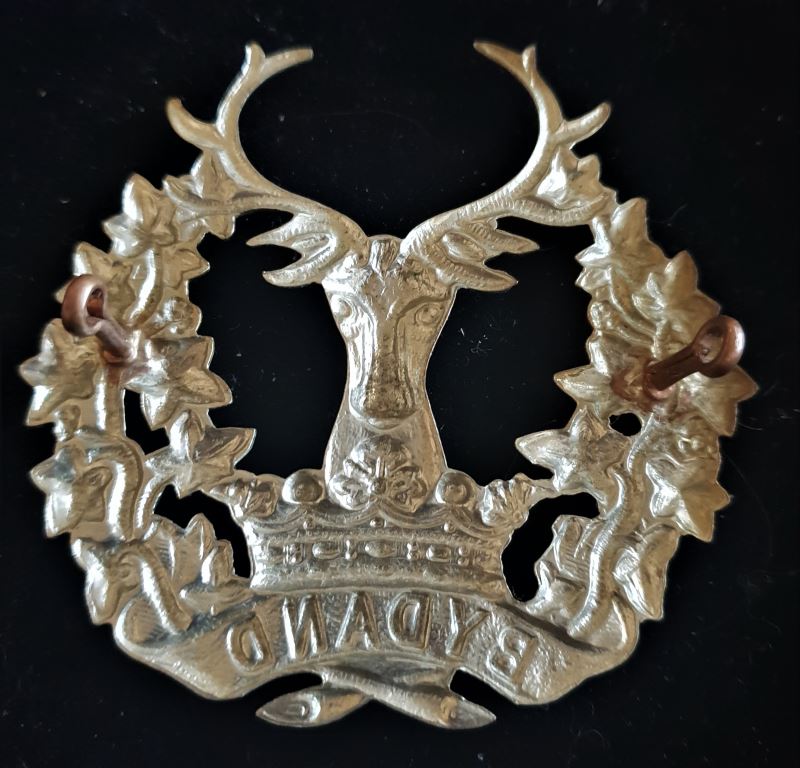

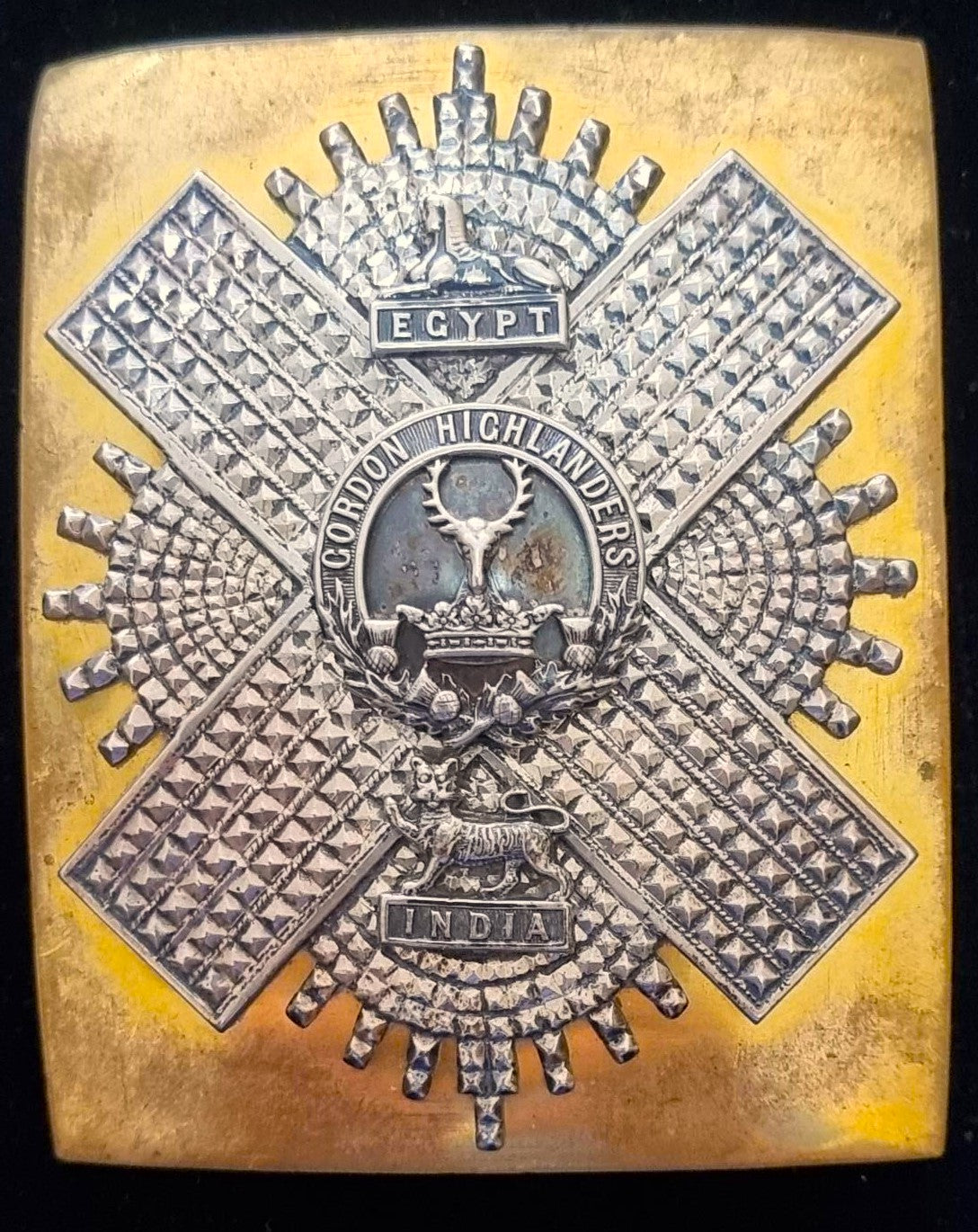

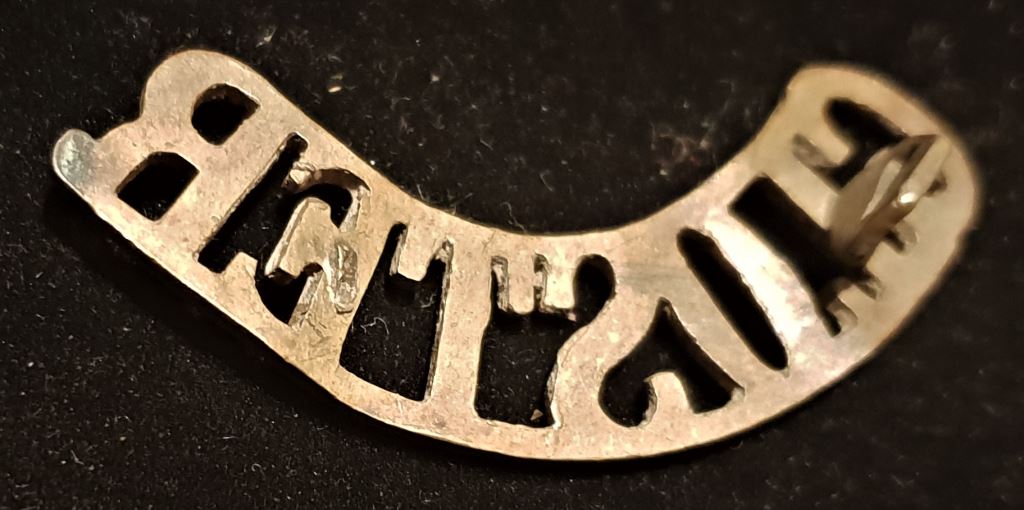
Gordon Highlanders Officers Shoulder Belt Plate used from 1881.


Great War Australian Welcome Home Medal, 26mm, gold (9ct.), the obverse featuring a soldier, the reverse engraved ‘Pres. by the Council of the Shire of Cambooya to J. Hannah member of the A.I.F. 1918’, with elaborate ring suspension,
Good very fine. $650


Great War Australian Welcome Home Medal, 40mm x 31mm, gold (9ct.), the obverse featuring a soldier above which are engraved initials ‘G.A.’, the reverse engraved ‘Presented to G. Armstrong by the citizens of Weston on his return from active service’, with small ring suspension,
Good very fine. $685


Green and White Diamond Just released, 556 pages by Neville Browning. 20th Bn never released a unit history, a must have for unit history collectors.
SOLD
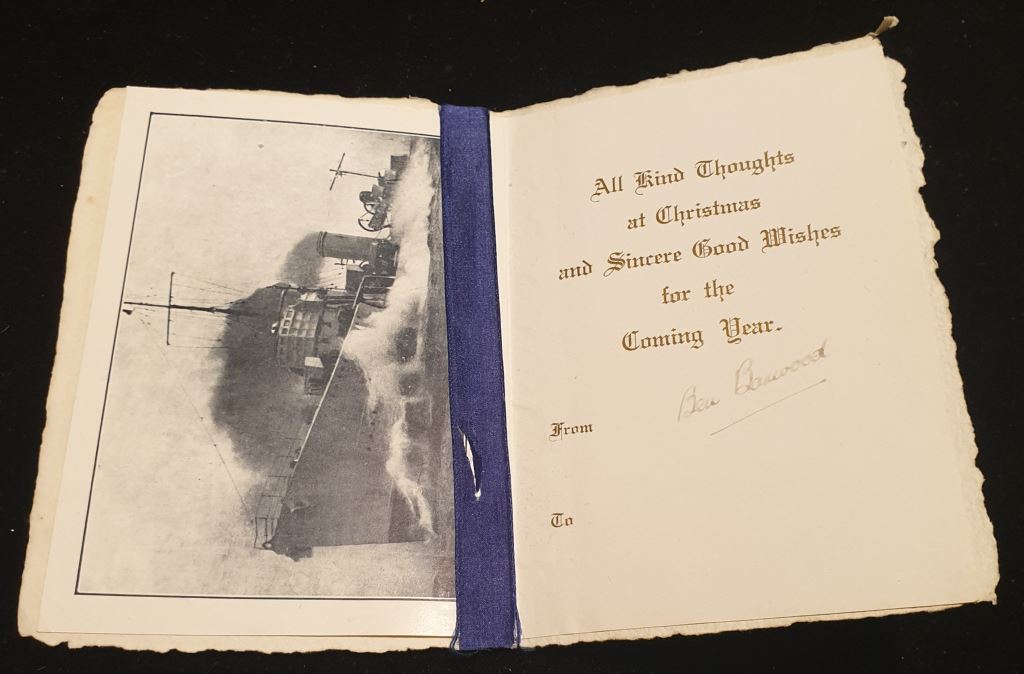

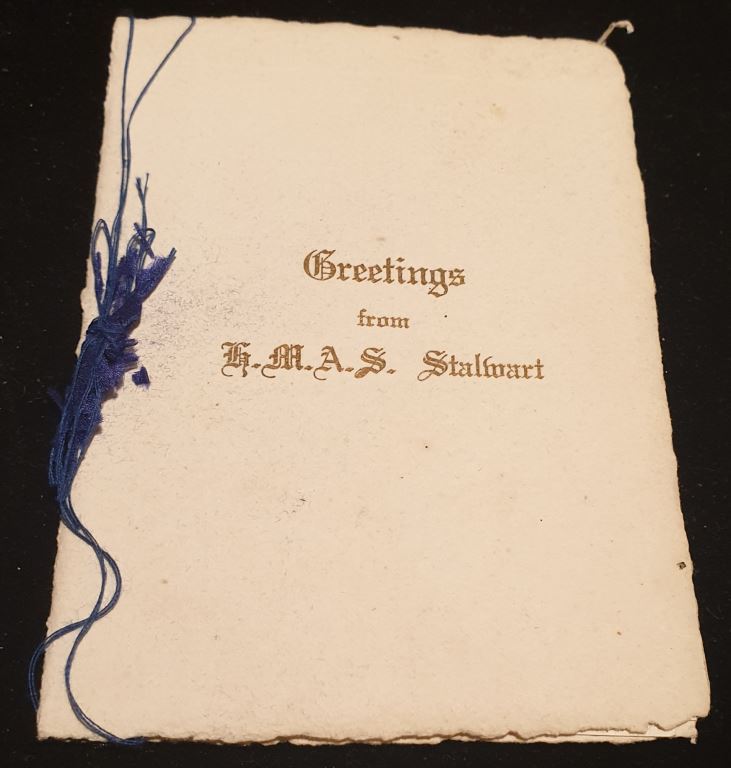

Greetings from H.M.A.S. “Stalwart” card. All kind thoughts at Christmas and Sincere good wishes for the coming year. Signed “Ben Baswood”
$40


Grenadier Guards Bandsman’s tunic circa 1900
Grenadier Guards Bandsman’s tunic. A good early Kings Crown period example of scarlet woolen cloth with white facings to the cuff and collar. To the front nine double rows of band pattern lace, the lace is repeated to the sleeves and back with one left hand lower sleeve chevron. The wings are again with band lace, embroidered regimental GG device and fringe tassels. Fitted with Kings Crown Royal Coat of Arms buttons. I was originally expecting Guards buttons until I viewed the War Memorials example being a bring back by an Australian Jubilee 1897 Contingent Veteran during his visit to London. The interior with blanket lining and issue stamps. Very good condition $725.00
Footnote:
The Grenadier Guards used Royal Coat of Arms buttons on their band tunics to signify their status and lineage as one of the most senior infantry units in the British Army. The Royal Coat of Arms buttons are a mark of distinction and are worn by the Drum-Majors of all five regiments of Foot Guards. This practice is a tradition that has been adopted for all Drummers of Regiments of the Household Division, including the Grenadier Guards.


GRENADIER GUARDS SANDBAG ACTION CASUALTY
Single: Crimea 1854-56, 4 clasps, "Alma, Balaklava, Inkermann, and Sebastopol" correctly impressed to G. Alcock, Grenadier Gds.
3420 Private George Alcock ('Allcock' in the published roll), 3rd Battalion Grenadier Guards was severely wounded at the battle of Inkermann, 5 November 1854. On a later roll he is listed as ‘Dead W.O. 29.4.56'. As Private Alcock was classed as "Severely wounded" one can only guess that his death was a result of his wounding.
The Russian force of no less than 7,000 men attacked the Sandbag Battery bravely defended by 2,000 men. A rare casualty medal to such a significant action.
Slight contact marks and edge bruising, VF SOLD


Grenadier of the Imperial Old Guard. Patinated bronze.
A rather nice 19th Century bronze of a Grenadier in the French Imperial Old Guard. The overall height being 260 CM.
Very Good Condition sold


